
NWCPUD Board Helps Send Robotics Teams to World Championship
(April 23) The board of directors of Northern Wasco County PUD (The Dalles, Ore.) is supporting the robotics teams of The Dalles High School and The Dalles Middle School. All three teams are competing at the 2024 VEX Robotics World Championship in Dallas, Texas. VEX Worlds began on April 24 and ends on May 3.
The teams gained support from the board after attending an April 2 general session. They provided demonstrations with their robots and talked about the competitions. They also spoke about the skills they learned and used while competing. The board was impressed with the presentations and unanimously voted to donate to the program for their trip to VEX Worlds.
Beyond science and engineering principles, VEX encourages creativity, teamwork, leadership, and problem-solving among groups.
“Supporting STEM (science, technology, engineering, and math) in the schools is important to the district,” said Cyndi Gentry, director of corporate services for the PUD. “These young competitors have worked hard to earn this opportunity and we know that they will represent the community in a manner we can all be proud of. We wish them safe travels as they depart tomorrow, and the best of luck at Worlds.”
PCWA Asks Raw Water Customers for Voluntary Conservation

(April 23) Placer County Water Agency in Auburn, California, has asked customers who purchase untreated water for irrigation purposes to consider voluntarily reducing or suspending use of that water for the next several months. The request results from damages at a Pacific Gas & Electric facility that delivers water to PCWA from Lake Spaulding.
At its April 18 board meeting, the PCWA Board of Directors approved a variance that opens the conservation opportunity to the smallest raw-water customers. Previously, only customers purchasing at least 2 miner’s inches of raw water could opt for a temporary, seasonal reduction.
“This is an unforeseen situation due to conditions beyond our control at a PG&E facility,” said Robert Dugan, chair of the PCWA Board of Directors. “We know this may cause a hardship to many of our agricultural customers, especially as we head into the hot months.”
PCWA delivers untreated water from Sierra Nevada streams to agricultural customers via open ditches originally constructed during the Gold Rush. The agency buys this water from PG&E, which operates Lake Spaulding and related hydroelectric facilities. One of those facilities, Spaulding Powerhouse No. 1, was taken out of service by PG&E due to corrosion in a pipeline and leakage that then damaged their infrastructure.
This water also makes up a substantial share of the water PCWA treats to drinking water standards and delivers to thousands of households and businesses. PG&E has reported it may be able to restore partial water deliveries by mid-June but full service might not resume until the end of summer.
Continued here.
WRAP Participants Not Ready for Binding Phase, Now Aim for 2027 Start
(April 22) Participants in the Western Resource Adequacy Program have elected not to move into the binding phase of the program in the summer of 2026. Instead, participants will propose a revised WRAP transition plan with the goal of beginning the binding phase in 2027, members of WRAP said in a letter to the Western Power Pool on April 22.
In the letter, participants stated the WRAP is “more important than ever,” but that its future value “will require a critical mass of participants who are committed to fully binding operations.” According to the letter, some participants are concerned about meeting WRAP requirements in the next few years. Therefore, participants concluded they would not have a critical mass committing to binding operations by 2026.
“We remain unwavering in our support for WRAP and achieving the benefits of binding operations as soon as practical,” participants stated in the letter. “Our goal now is to work toward having a critical mass of participants elect binding operations in 2027.”
In the coming weeks, WRAP participants will develop a proposal for a revised transition plan. Once the plan is complete, participants will submit the plan to stakeholders and the WRAP Board of Directors for consideration.
“We have worked closely with participants as they considered this decision,” Western Power Pool President and CEO Sarah Edmonds said in a statement responding to the letter. “WPP will continue working with them as they develop their revised transition proposal.”
The Western Resource Adequacy Program, managed by WPP, is the first regional reliability planning and compliance program in the West. WRAP aims to deliver a region-wide approach to assess and address resource adequacy. Among others, participants in the program include the Bonneville Power Administration, Chelan PUD, Clatskanie PUD, the Eugene Water & Electric Board, Grant PUD, Seattle City Light, Snohomish County PUD, Tacoma Power, and The Energy Authority.
Umatilla Electric Annual Meeting Draws Over 650 Attendees

(April 22) The Eastern Oregon Trade and Event Center in Hermiston buzzed with energy on April 20 as more than 650 members and guests gathered for Umatilla Electric Cooperative’s annual meeting.
The event was a resounding success, highlighted by engaging presentations, exciting door prizes, and unforgettable entertainment. Kicking off the evening, Weston Putman, manager of public relations, served as the event’s emcee and set the stage with a video introduction showcasing the UEC Board of Directors. Putman was followed by a presentation of highlights from 2023 by Board President Bryan Wolfe and an update on the cooperative by General Manager/CEO Robert Echenrode.
In the board election, Bryan Wolfe was reelected in District 3, and Phil Hamm secured another term in District 4.
Throughout the event, attendees were treated to a meal prepared by Castle Event Catering of Richland, Washington. Over 40 prizes, including the coveted grand prize of a full year of free electricity, kept the excitement high and added to the festivities.
The evening concluded with a fun performance by Rock Dee House Dueling Pianos, leaving attendees with lasting memories. As a token of appreciation, each household departed with the gift of a power tower—a portable multi-port charging station—symbolizing the theme for the year, Creating Powerful Connections.
“We are thrilled to have record attendance at this year’s event and look forward to seeing our members throughout the year across our service territory,” Putman said.
Students Race Solar-Powered Cars at SMUD Event

(April 18) On April 24, over 80 high school teams raced model solar-powered cars they designed and built themselves for SMUD’s (Sacramento, Calif.) annual Solar Car Race at Sacramento State Hornet Stadium. Teams used solar panels, motors, and gear sets to build a unique car—but it was up to them to be creative and innovative and build the fastest car possible.
This was the first year that middle school students competed in the Solar Car Race. Over 30 middle school teams competed in the race at Consumnes River College on April 22 ahead of Wednesday’s high school race.
Teams competed for awards in several categories, including race time, sustainability, innovation, creativity, and more. The Sacramento Electric Vehicle Association also attended the event and brought a variety of electric vehicles for students to view and explore.
SMUD is committed to helping local educators bring science, technology, engineering, and math concepts to the classroom, especially as SMUD aims to decarbonize the region’s power supply by 2030. The Solar Car Race gives teachers an opportunity to demonstrate a real-world technology design process and brings students together in a fun, entertaining way. The Solar Car Race has become increasingly popular as STEM education has gained momentum locally. It has become a larger part of many schools’ curriculums.
The Solar Car Race is just one of several community events and programs that SMUD sponsors or organizes to support STEM education. A regional favorite, the California Solar Regatta at Rancho Seco Recreational Area, will be held May 3-4. More information about the Solar Regatta is available at www.smud.org/solar-regatta.
LPEA Honors Crews on National Lineworker Appreciation Day
(April 18) As part of its National Lineworker Appreciation Day celebration, La Plata Electric Association (Durango, Colo.) hosted a breakfast to honor its lineworkers, including a special recognition ceremony.
“We are incredibly grateful for the commitment and expertise of our lineworkers,” said Graham Smith, Interim CEO of LPEA. “They are the backbone of our organization, working around the clock to maintain our infrastructure and respond swiftly to outages. Their dedication to service is truly commendable.”
“We invite the community to join us in expressing appreciation for our lineworkers,” added Smith. “Their dedication and commitment to service are truly inspiring, and we are proud to recognize their invaluable contributions to our community.”
LPEA also encouraged community members to show their support for lineworkers by saying “thank you” in person or on social media. The utility also reminded the community about opportunities for individuals considering a lineworker career.
“At LPEA, we not only recognize the invaluable contributions of our lineworkers but also actively support the next generation of aspiring lineworkers,” said VP of Operations Jerry Sutherlin. “We offer scholarships for anyone considering a lineworker career. These scholarships provide financial support and educational opportunities for individuals who are passionate about serving their communities and ensuring the reliable delivery of electricity. We believe in investing in the future of our industry and empowering individuals to pursue fulfilling careers as lineworkers.”
Roger Kline to Represent Wasco County on Q-Life Board
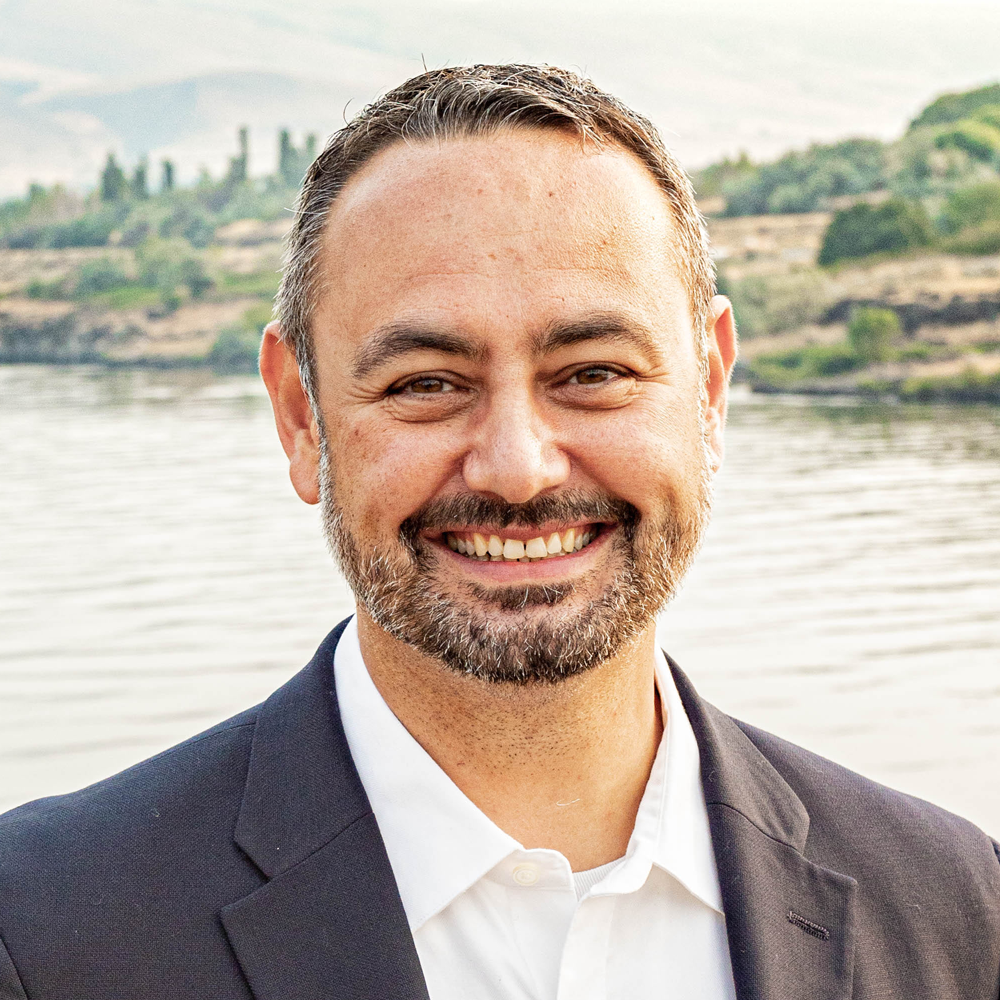 (April 17) The Wasco County Board of Commissioners has appointed Northern Wasco County PUD (The Dalles, Ore.) General Manager, Roger Kline, to represent the county on the QualityLife Intergovernmental Agency Board of Directors. Beginning in 2002, Q-Life has been a collaborative effort of public agencies in The Dalles dedicated to enhancing the quality of life and economic development by facilitating the community’s access to broadband-level internet.
“I am honored by the opportunity to help lead Q-Life at such a pivotal time,” Kline said. “The vision and mission of the organization to provide reliable and affordable high-speed internet service to every address in Wasco County really speaks to my public power background and public service ethos. I appreciate having the full support of the PUD’s board of directors in forging these partnerships that can better our entire community.”
Q-Life’s vision is to enable every member of the community to participate in education, healthcare, and economy through a stable internet connection without sacrificing other essential services.
“Taking the lessons learned from the pandemic, reliable high-speed internet is just as important as reliable electricity and water. Ensuring safe and affordable provision of essential human services is what utilities do, and what I do,” Kline said. “I am looking forward to partnering with the county and the city to continue to improve the quality of life for the surrounding communities.”
13 NWPPA Member Utilities Earn APPA Safety Awards
(April 9) On April 9, the American Public Power Association announced that 145 utilities, including 13 NWPPA member utilities, earned the association’s Safety Award of Excellence for safe operating practices in 2023.
More than 160 utilities entered the annual Safety Awards for 2023. Entrants were placed into one of five categories (A-H) according to their number of worker-hours. They ranked Diamond or Gold based on the most incident-free records and overall state of their safety programs and culture during 2023. The NWPPA member utilities who earned awards for 2023 are:
- Mason County PUD No. 1 (Wash.) —Gold, Group C
- Clatskanie PUD — Diamond, Group D
- Northern Wasco County PUD (Ore.) — Diamond, Group D
- Tillamook PUD (Ore.) — Gold, Group E
- Clark Public Utilities (Wash.) — Diamond, Group F
- Mason PUD 3 — Diamond, Group F
- Clallam PUD (Wash.) — Gold, Group F
- Cowlitz PUD (Wash.) — Gold, Group F
- Roseville Electric Utilities (Calif.) — Gold, Group F
- Energy Northwest (Wash.) — Diamond, Group G
- Tacoma Power (Wash.) — Diamond, Group G
- Chelan PUD (Wash.) — Gold, Group G
- SMUD (Calif.) — Diamond, Group H
For details about the group ranges and a full list of winners, please visit www.publicpower.org/safety-award-winners.
Tantulus’ TRUSense Gateway Receives UL Certification
(April 22) Underwriters Laboratories has certified that Tantalus Systems’ TRUSense Fiber Gateway meets UL’s safety requirements. The certification for the TFG is also applicable for the TRUSense Cellular Gateway. Receiving this UL certification validates that the TFG and TCG satisfy the necessary electric safety requirements to be deployed across the electric grid.
The TRUSense Gateway accelerates and simplifies a utility’s journey to becoming more reliable, resilient, and innovative. It is an integral part of the Tantalus Grid Modernization Platform. It provides utilities with improved visibility, command, and control across the entire grid—from the substation all the way to connected devices located behind the meter. The TRUSense Gateway is a multi-purpose socket-based device that enables utilities to benefit from AMI 2.0 functionality without unnecessarily ripping and replacing existing meters. It also delivers secure and interoperable integration and control of distributed energy resources, smart appliances such as water heaters, and circuit breakers located behind the meter for enhanced demand-side flexibility programs.
Continued here.
Tantalus Systems is a smart grid technology company focused on helping build sustainable utilities. For more information, visit www.tantalus.com.